
Before investing in diamond jewelry, it is important to learn the art of knowing what you are paying for. Understanding how a diamond’s value is defined makes it much easier to make tradeoffs. For instance, you may prefer a larger diamond with slight flaws or a smaller stone with no flaws.
The four Cs are the four characteristics conventionally used to determine the quality and worth of a diamond: cut, carat, color, and clarity. The features of a diamond are graded and then categorized by the diamond industry to set its retail price. High-quality diamonds are graded by a professional and come with a certificate of authentication.
The 4Cs grading system provides a guideline instead of a “good” or “bad “scale. It is important to remember that there is no right answer about the 4 Cs, and plenty of information can be quite misleading on what is required when buying a diamond. At the end of the day, it all comes down to what you think of the diamond’s natural appearance.
Cut
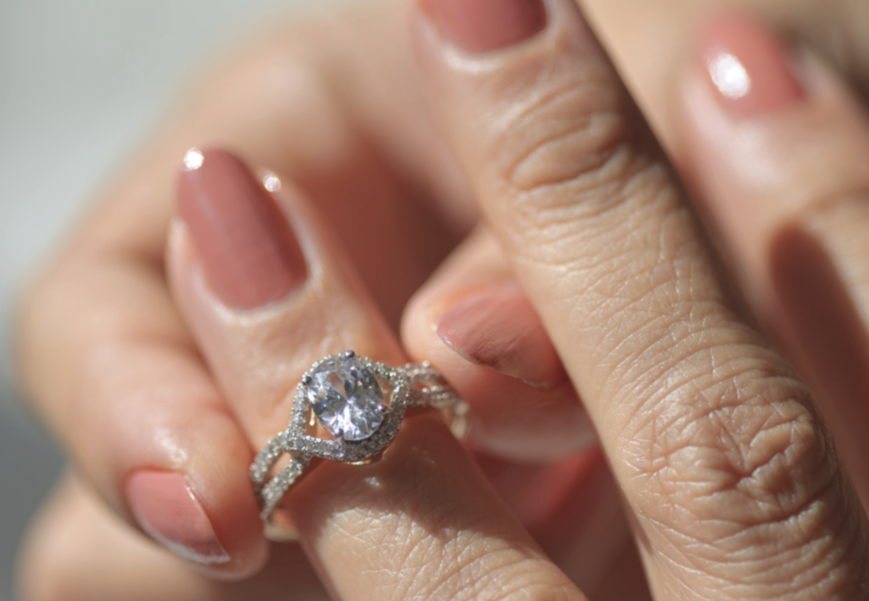
The ‘cut’ is perhaps the most fundamental aspect of a diamond’s quality that influences its beauty. It refers to a diamond’s angles, symmetrical facets, proportions, scintillation, fire, brilliance, and finishing details. These factors significantly contribute to the stone’s ability to sparkle, as well as its general aesthetic appeal. The facets, proportions, and polish determine how well the diamond interacts with light, whereas brilliance is the stone’s ability to return light to the eye.
The GIA chart ranks Diamond Cut on a scale of Ideal, Excellent, Very Good, Good, Fair, and Poor. If the diamond is cut well, its clarity and color will be very bright and beautiful. There are many ways to cut a diamond; the most common shapes include round, oval, princess, emerald, heart, pear, cushion, radiant, Asscher, and marquise.
Color
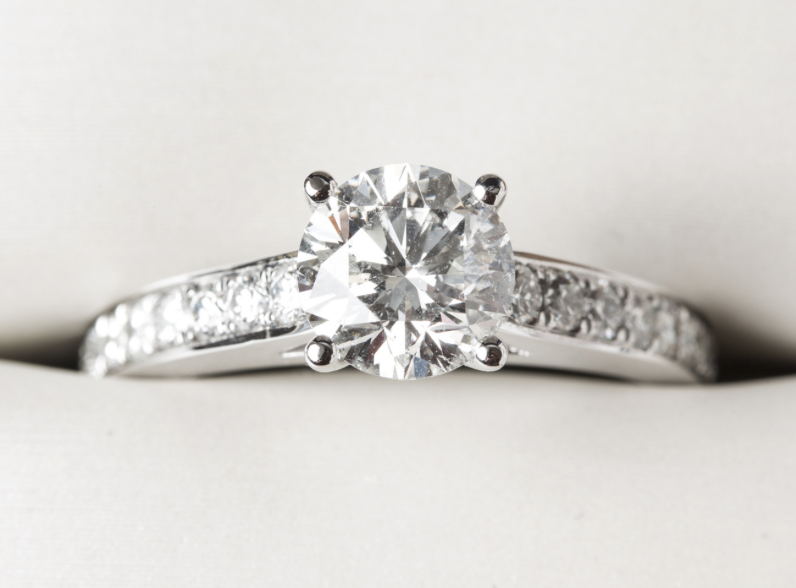
Diamond color determines how colorless or white a diamond is. The GIA grades the stone from D to Z, D being the most colorless and Z having visible yellow or brown tint. D-grade diamonds are the most expensive. But other factors, such as weight, shape, and carat, also influence the final price.
The cut of the diamond significantly affects its color; for example, a round diamond hides color well, which means you can go further down the scale without noticing any yellow hue. On the other hand, radiant and oval cuts reveal color easily. With emerald and Asscher shapes, you can normally go as low as J grade before you can notice any significant color.
Letters D through F signify colorless on the grading scale, G through J signify nearly colorless, and letters K through Z show hints of yellow. Fancy diamonds are stones that show other colors and have a yellow intensity beyond grade Z. Such stones come in tones of saturated pinks, greens, reds, and blues and are the rarest.
Clarity
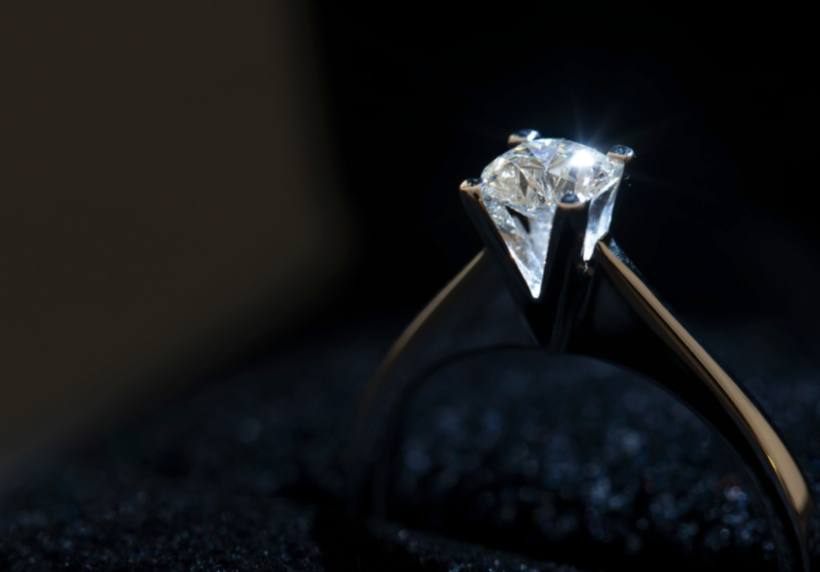
Clarity measures a diamond’s purity and the presence (or absence) of little imperfections. A diamond is more valuable if it has a more flawless or clearer diamond. Inclusions are internal flaws, whereas external flaws are blemishes. Gemologists and jewelers use the GIA grading scale from flawless (FL) to very, very slightly included (VVS) to slightly included (SI) to included (I). Each category has a number rating clarity.
When buying diamond jewelry, your aim should be to find the cheapest “eye-clean” stone. “Eye-clean” describes diamonds that may have internal flaws when looked through a microscope or magnifying glass but are not visible to the naked eye. However, if clarity matters to you, the general rule is to stick with diamonds with a rating of S1 and up.
Carat
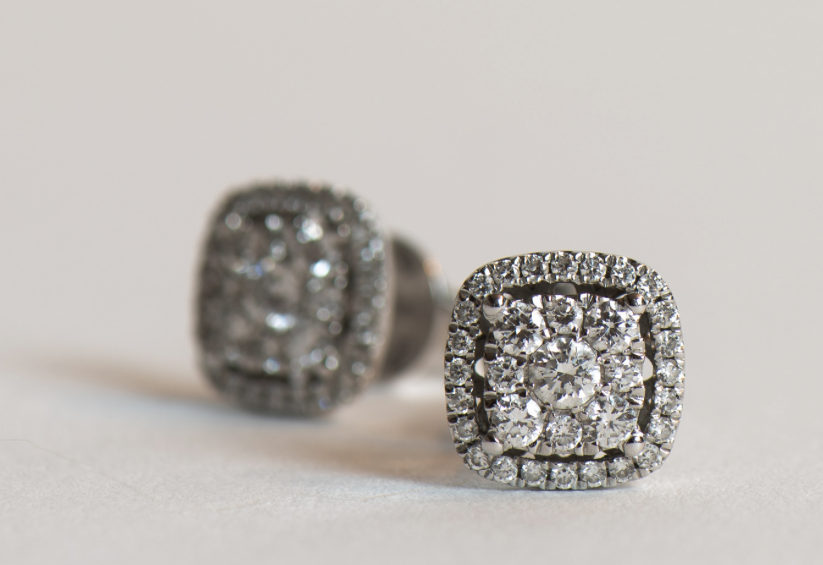
A diamond’s weight, or mass, is measured in carats. A metric carat equals 200 milligrams, and every carat can be further divided into 100 points. Diamonds over a carat are expressed in decimals, such as a 2.5-carat diamond. When the carat of a diamond is larger, it automatically becomes more valuable.
Since no two diamonds are the same, the carat should be seen only as a guideline because it only shows the weight of the stone rather than its real size. Depending on the cut of the diamond, two 1-carat diamonds may turn out very different in size. Even though the carat is a component to consider when purchasing a diamond, the brilliance and general appearance should be prioritized more. Be sure to explore your options with a jeweler once you have decided upon a stone.
How Do The 4 Cs Work Together?
Each of the 4 Cs greatly contributes to a diamond’s overall visual appeal and value and makes each of them unique. However, a diamond should be seen as an organic whole. Since the eye has trouble differentiating a single diamond feature by itself, like color or clarity, it is crucial to understand how the 4 Cs influence each other.
Which Of The 4 Cs Is The Most Important?
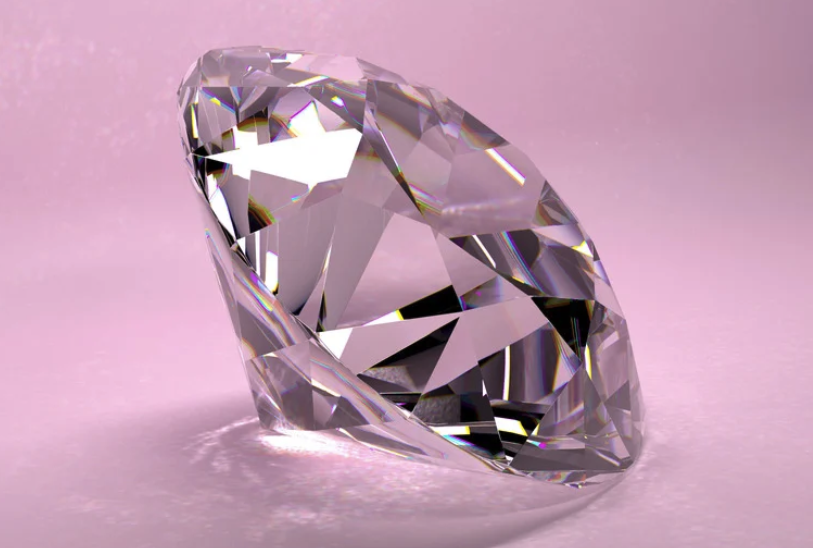
The cut is the most important C of a diamond since it significantly impacts its beauty. When buying a diamond, look for high levels of fire and brilliance, and be ready to hold back from spending on aspects like Color or Clarity to make up for an excellent cut.
The second most critical area to consider is Color. A diamond should appear colorless or white to the naked eye. Ensure the color doesn’t interfere with or distract the colored and white light reflection. The next important characteristic following Color is Clarity.
Pick a diamond that is free from visible inclusions or blemishes and doesn’t disrupt the fire or brilliance of the stone. Balancing the first 3 Cs will decide the Carat of your diamond. If you pay adequate attention to the Cut, Color, and Clarity, you will benefit from the biggest possible stone that fits your budget and looks dazzling.
Wrap Up
When buying a diamond, it is extremely important to keep the 4 Cs into account. However, make sure you don’t get too fixated on each of the 4 Cs individually and instead focus on the diamond in totality. Your diamond’s final look and value will be significantly reflected by how well the 4 Cs were balanced. Be sure to talk to a gemologist or jeweler who will be able to properly guide you about the 4 Cs.